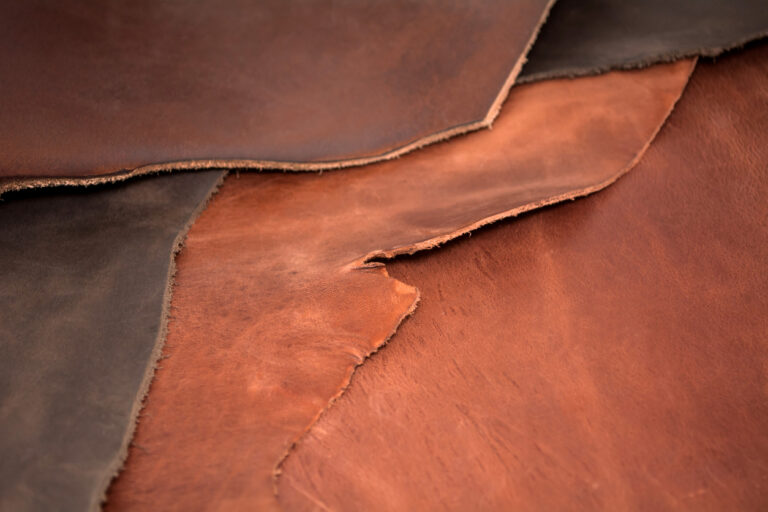
The Difference Between Real Leather and Vegan Leather
At first glance, the differences between real leather and vegan leather seem negligible. On further
Since the early 2000s small batch manufacturing has been reshaping how people think about consumption. Largely driven by a growing awareness of the negative impacts of fast fashion, mass production, and overconsumption, it represents not just a production method but a broader cultural shift toward sustainability and intentional living. At Parnassus, as ethical leather designers working with hides from our regenerative farm and like-minded partners’ farms, small batch production has enabled us to create a closed loop system by turning what was once a waste product into beautiful, sustainable leather goods. But what are the benefits of small batch production? Has it only grown out of the disadvantages of mass production, or are there other driving factors behind its momentum? We take a look at some of these important questions below.
What Is Small Batch Production?
Small batch production means fabricating goods in limited quantities, focusing on quality, transparency, and sustainability. But is it the total opposite of mass production? Where high volume, automated manufacturing, speed and cost cutting are prioritised? Well, yes, but also, it’s impossible to talk about small batch production without considering how it became possible in the first place – and how it has evolved over time.
Small batch production is still a form of production and it frequently benefits from the same industrial innovations that made mass production possible. Tools, machinery, technology and supply chain systems developed for large scale manufacturing also support smaller, more intentional runs. While the scale and philosophy wildly differ, small batches wouldn’t exist without the technological foundations that have been laid to enable mass production. It’s a reimagined evolution of the systems that have built modern manufacturing. And like many shifts toward sustainability, it’s an evolution driven by new research, growing awareness, and the urgent need to address climate change.
Of course, some artisans create entirely handmade products using traditional techniques, but this is better described as bespoke or one off production rather than small batch production.
Small Batch vs Mass Production
We know this article is about the benefits of small batch production, but as previously outlined, it’s important to look at how it sits alongside mass production. In the interest of offering a balanced overview of both approaches, we have highlighted their respective strengths and limitations.
| Aspect | Small Batch Production | Mass Production |
| Scale | Produces goods in limited quantities | Produces goods in large quantities |
| Flexibility | High – easier to adapt designs or respond to feedback | Low – margins don’t allow for changes or customisation |
| Lead Time | Often longer due to artisanal or manual processes | Shorter – optimised for speed and volume |
| Cost per Unit | Generally higher – due to smaller volume and more labour | Lower – benefits from economies of scale and cheaper materials |
| Waste | Typically lower – less overproduction | Often higher – risk of unsold inventory |
| Quality Control | High – more attention to detail per unit | Standardised – consistent but less individually monitored |
| Resource Use | May use more local or sustainably sourced materials | Often relies on global supply chains and high resource consumption |
| Innovation Speed | Slower – deliberate design and testing cycles | Faster – frequent trend updates and product cycles |
| Environmental Impact | Lower – especially with sustainable practices | Can be high due to scale and intensive manufacturing |
| Consumer Experience | Emphasis on unique design, craftsmanship, and story | Emphasis on accessibility, affordability, and convenience |
| Worker Ethics | Often ensures fair wages and conditions | Varies widely; higher cases of unethical labour in complex supply chains |
While mass production serves certain industries, for fashion, it is a largely unsustainable model that mostly relies on overconsumption, unfair labour, and results in environmental degradation. The benefits of mass production are undeniable, but are only meaningful as long as ethical management and practices are in place. Without these, the benefits are outweighed greatly by the drawbacks. This chart highlights both the pros and cons of mass production and shows that small batch production isn’t just a trend, it’s a deliberate, thoughtful alternative within a broad system
What Small Batch Production Means for Fashion and Farming
As a business that creates small batch products from sustainable leather – namely, unique leather bags and accessories – we straddle two industries: fashion and farming. Mass production is the dominant model in both and in the case of leather, fashion and farming are deeply interconnected. The quality and sustainability of real leather goods begin long before the design process, on the land where the animals are raised. But, the majority of leather used in fashion today comes from industrial farming systems and is processed through intensive chemical tanning methods – both of which carry heavy environmental costs. For example, intensive livestock farming alone accounts for between 12% and 19% of global greenhouse gas emissions, while at the same time, the fashion industry is responsible for 2-8% of global carbon emissions and 20% of wastewater, much of it from dyeing and tanning processes.
In contrast, sustainable fashion and ethically sourced leather are growing responses to the environmental and social costs of fast fashion. Fast fashion often promotes excess and disposability; slow fashion values longevity, timeless design and the health of the planet. Producers working with leather hides from regenerative farms, where animals are raised on pastures that restore soil health and sequester carbon, can reduce the footprint of leather from the start and promote closed loop systems.
The environmental credentials of both fashion and farming have room for improvement. Small batch production makes this possible by creating space for transparency, traceability, and intention. Producers can focus on quality, reduce their reliance on resource-heavy processes, and create long-lasting pieces that don’t end up in landfills after a single season. Sustainability and the fashion industry must advance hand in hand if its current impact on the climate is to be taken seriously.
Buying Smart Is the New Luxury
Sadly, mass-produced items continue to flood the market through ultra-low-cost online retailers, making fast fashion and disposable goods more accessible than ever. These platforms thrive on high volumes and rock-bottom pricing, often at the expense of environmental and ethical standards. Thankfully, growing awareness around these issues is driving change. New legislation and transparency initiatives are meaningful steps toward challenging this model and promoting more responsible production.
Consumers are also becoming more mindful with each passing season. Not only are increasing numbers of people buying preloved items to save money and reduce waste, but when buying new, people now also want to know the story behind their products; where they came from, how they were made, and what kind of impact they might leave behind. Transparency and traceability are becoming less optional and more of an expectation. Small batch production makes this level of honesty possible.
Luxury is starting to mean something different, too. Not long ago, it meant shiny designer items with an expensive price tag and labels stating nothing about their manufacture or cost to the Planet. Now, luxury has a more rounded definition, with consumers looking for uniquely designed items with a story, made from natural, tactile materials such as butter soft, handmade leather bags. Longevity and timelessness have come back into fashion, with many people preferring to nurture and repair their belongings instead of buying into a throwaway mindset.
Parnassus – Small Batch Premium Leather
Natural leather is a valuable by-product of an existing system. At Parnassus, our hides come from animals raised for meat on regenerative farms – nothing is wasted, and we are proud to promote a circular economy within our business practices. Each of our full grain leather products is unique, from small, fully traceable batches made with love and care in the UK. Our sustainable leather bags are about as far from mass produced as you can get – thoughtfully designed for lifelong use and enduring quality.
When you choose our ethical leather goods, you’re not just purchasing a product; you’re investing in a process that honours the environment, supports local communities, and respects the natural materials we work with. You’re also putting your hard-earned money toward sustainability, rather than fueling demand for disposable, unsustainable products.
At first glance, the differences between real leather and vegan leather seem negligible. On further
Derived from the skins of animals and a byproduct of animals slaughtered for meat, the